

What digital forgot about the analog soul
By Anna Rodriguez-Scarfe exclusively for Pilot Lights
There was a time when making something—something worth watching, reading, or listening to—took a kind of stillness. It wasn’t silence. It was presence. There was friction in the process, and in that friction, intention.
Today, the work moves faster. The machines are better now—at capturing attention, at measuring it, at monetizing it. But in that rise, in that perfectly optimized feed, we lost something older and more fragile: the desire to say something real, not just something that moved.
I’ve spent my career in the business of transformation. I was there when television turned into streaming, when timelines gave way to reels, when “going digital” became a strategy, not just an upgrade. Later, I helped media companies scale on social platforms. I worked inside the very engines that reshaped global communication.
I believed in the power of access. I still do.
But what I’ve come to see—quietly, and with no small measure of accountability—is this: in chasing reach, we lost the weight of what we made. Meaning got edged out by metrics. And somewhere along the way, performance became the point.
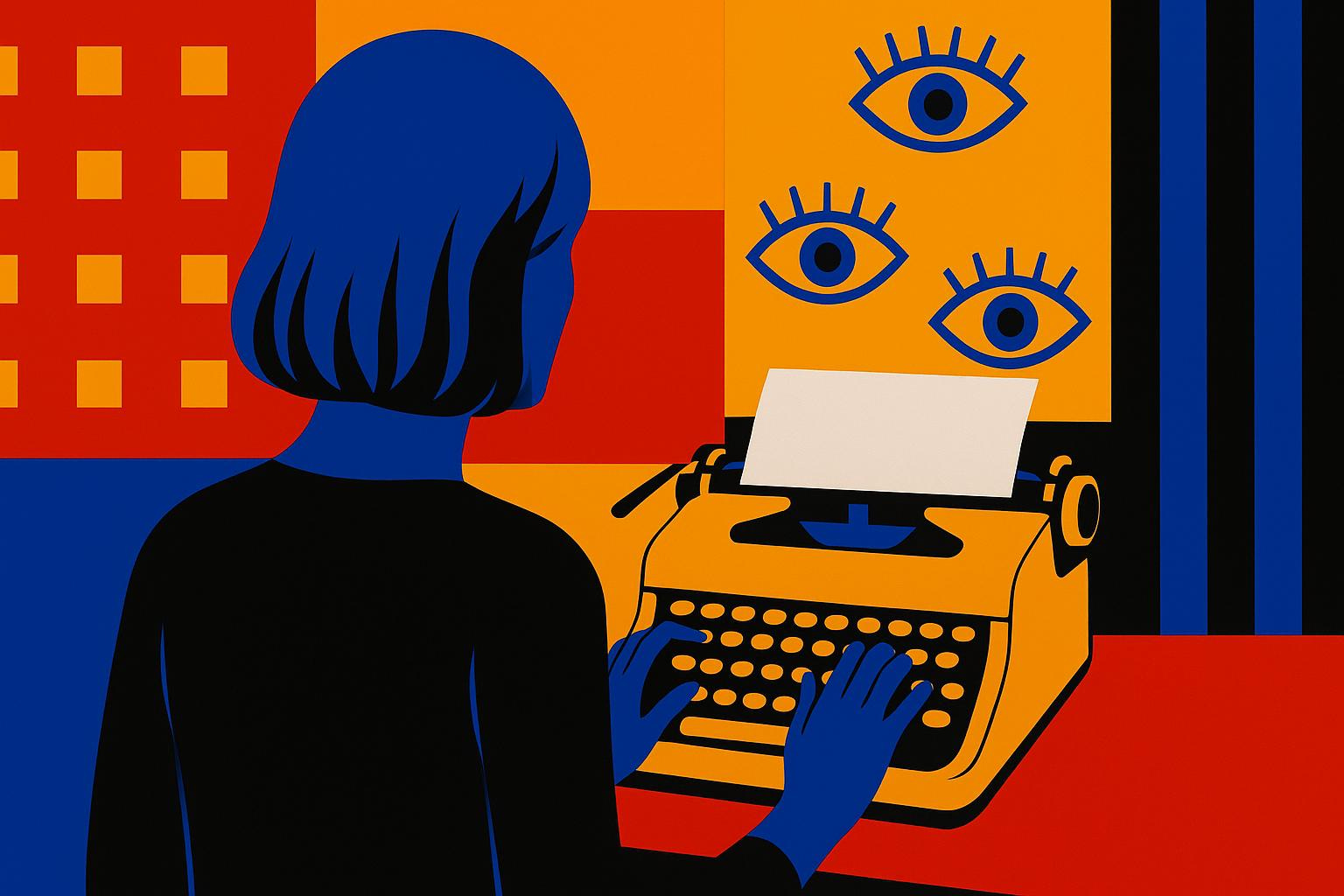
When the editor was still human
My first real education in media came at Probe Productions, a boutique company that ran on caffeine, conviction, and impossible standards.
Probe Productions was a multi-awarded production company that pioneered quality investigative journalism in the Philippines.
We were small—but powerful. We lost sleep over edits. We agonized over angles. And every Monday, we sat in meetings where the pieces we poured our hearts into were dissected with clinical precision.
Every jump cut, every sequence, every voice-over cue was fair game. Nothing was ever “good enough” if it could be sharper, deeper, more honest.
That pressure forged clarity. And craft. It taught me that intention is not a luxury—it’s the core of everything.
At Probe, there was no buffer between creator and consequence. If the story fell flat, we knew. If the message rang hollow, we felt it.
It wasn’t that there were no numbers. Of course, there were TV ratings. But they weren’t the endgame. There was pride in the storytelling—how a piece unfolded and held together. We made work that was meant to stand, not just circulate. And we knew the difference.
Back then, decisions passed through hands. Judgment mattered. Flaws weren’t hidden by speed or filters. They were caught and fixed. That analogue rhythm—slow, demanding, intimate—wasn't perfect, but it protected something essential: the human editor. The one who still asked, “Does this matter?”
Then came the feed.
Suddenly, everyone could publish. Everyone could reach. But with that freedom came a new editor—cold, invisible, and endlessly hungry. The algorithm. And what it rewarded wasn’t nuance or deliberation—it was speed, scale, and reaction.
We adjusted. Not because we didn’t care, but because the rules changed. Meaning didn’t disappear—it just got outrun.
When performance replaced purpose
At ABS-CBN, I was asked to lead digital news just as the ground was shifting. It was a time of experimentation, of stumbling through unfamiliar tools—apps, SEO, SEM, social integration. We were learning a new language in real time. There was no roadmap. We optimised headlines before we even understood what optimisation really meant.
The line blurred between story and strategy.
It was thrilling. And it was disorienting. We still believed in great storytelling, in journalism with a spine. But the metrics started to whisper louder than instinct: click-throughs; bounce rates; completion curves. The vocabulary of judgment changed.
It was still about telling stories. But now we had to make them perform.
That was the quiet pivot—from editorial intuition to measurable outcome. We weren't creating for an audience we understood. We were creating for a system we were still trying to decode. And that system was already learning faster than we were.
We didn’t call it performance at the time. We called it best practice. Platform-ready. Search-friendly. But every choice bent slightly toward the question, “Will this win the algorithm?” And each time, the line blurred between story and strategy.
When we forgot what mattered
When I joined Meta, I finally saw the engine from the inside. The architecture of platforms. The design of feeds—the invisible mathematics behind what we watch.
We started with a simple pitch to partners: make longer videos so we can insert ads. But then the wind changed. Short-form content began to surge. The audience shifted. The monetisation model followed. And so we revised the formula again.
It wasn’t just about what worked—but what might, if behavior shifted. So we tweaked. We advised. We measured. We re-trained creators to follow what the system said audiences wanted.
We optimised for everything but the human behind the screen.
But after a while, the question haunted me:
“Who trained whom?”
Was the audience adapting to the platform? Or was the platform reshaping the audience?
And more than that:
“Was there still a human story being told, or had it become a machine story wearing a human face?”
I don’t long for a return to tapes and typewriters. Analogue had its own blind spots—barriers, gatekeeping, a lack of equity in whose stories got told. The digital shift made space for more voices, more access, more creative experimentation. It offered speed, scale, and the possibility of reinvention.
But transformation, if left unchecked, can become extraction.
We learned how to stretch ourselves thinner. How to publish more, faster, across more channels. We learned how to make things that looked good in grids, that looped seamlessly, that converted clicks. We leaned into what was performative, because performance got results.
But something else began to happen, too—quietly, then urgently. Creators burned out. Editors left. Audiences grew cynical. Engagement went up, and trust went down. It turned out the machine was hungry, but not loyal. It always needed more.
We optimised for everything but the human behind the screen.
Towards a more human algorithm
I’m not against digital. I helped build it. I believed in it. I still believe in its potential.
But the next wave of transformation can’t just be smarter. It has to be more honest. More human. It has to recover something we left behind.
Deliberation. Stories that take time to unfold.
Curation. Judgment beyond code.
Depth. Work that doesn't just perform in the moment—but stays.
These aren't sentimental yearnings, they are survival tools. Because the creators, platforms, and publishers that last will be the ones who remember how to ask, “What is this for?” and not just, “How did it do?”
The next algorithm may be more advanced. But what we need is simpler:
To pause. To mean what we make. To remember to whom we’re speaking.
Because in a world that’s forgotten meaning, that pause might be the most radical thing we have left.
Anna Rodriguez-Scarfe is a former investigative journalist turned digital transformation leader—one of the rare few who’s spliced reel-to-reel tape and later led social media partnerships at Meta. She helped shape digital news, streaming platforms, and content strategy at ABS-CBN, the Philippines’ leading media company. A lifelong writer, she reflects on the meaning of life through the lens of work, always chasing insight over noise, and meaning over metrics.